Understanding the Fog Computing and How It Impacts the Banking Services
What Is Fog Computing?
Devices at the edge of the digital world are getting smarter. They collect more data every day. They track behavior, patterns, and environmental changes. At the same time, cloud platforms sit on the other end of the spectrum. They provide huge amounts of storage and computing power.
Between these two worlds is the Internet of Things (IoT). Billions of devices now stay connected, share information, and send data back to systems. Because of this, companies need faster ways to process data and respond in real time. This is where fog computing becomes important.
Fog computing moves some of the processing power closer to the device, instead of sending everything to the cloud. This reduces delay, improves speed, and helps systems act on data faster.

Why Fog Computing Matters
Today, many systems send all device data to the cloud. However, this method is not always efficient. Networks get overloaded. Costs rise. Response times slow down. And as IoT grows, these problems get worse.
Fog computing offers a clear solution. It can process data locally, filter noise, and send only useful insights to the cloud. This reduces strain and speeds up results. It also gives companies more control over data privacy and security.
In many ways, fog computing works like a hybrid model. It combines the speed of edge processing with the scale of the cloud. Cisco was one of the first companies to introduce this idea.
How Fog Computing Works
Fog nodes sit close to the devices on a local network. These nodes act as smart processors. They review incoming data, remove irrelevant information, and forward important insights to the cloud.
Most fog nodes use common platforms like Linux or JVM. Companies can deploy apps on these nodes using virtualized code. Developers can also build complex workflows with simple drag-and-drop tools.
According to IDC, more than 40% of IoT data will be processed near the edge. And the fog computing market is expected to grow to $205 million by 2022.
Like complicated event processing, data inflow is analyzed/processed to derive conclusions. Companies such as start-up Flowthings have small-footprint code installed on fog nodes, and new jobs are ‘wired’ together using a graphical user interface. This enables developers to create new rules and expand the same instruction set to the cloud.
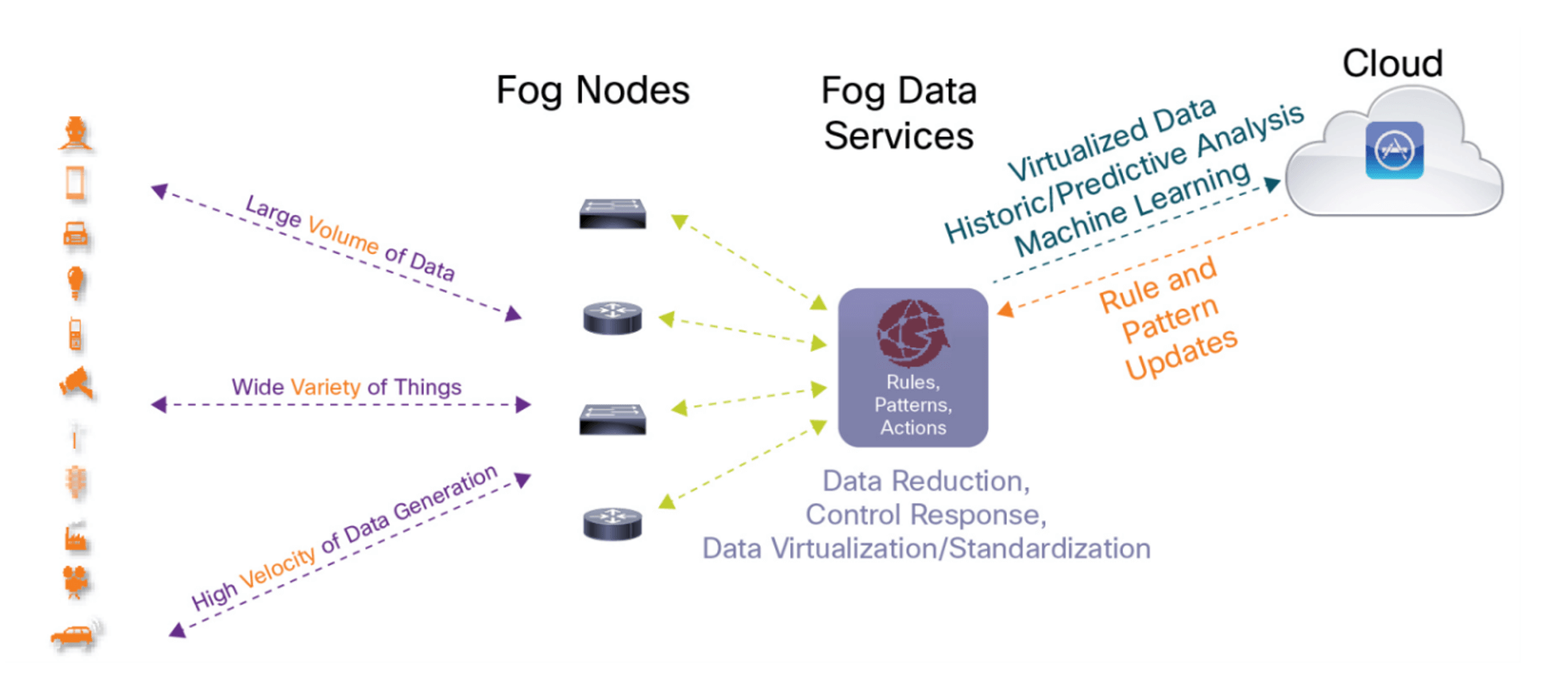
Reference: computing-solutions.pdf (cisco.com)
Fog Computing in Banking: Key Use Cases
Fog computing delivers powerful benefits for financial services. It helps banks respond faster, serve customers better, and support new digital experiences.
1. Personalized Customer Services
Banks can use fog-driven sensors and location tools to create personalized offers. For example, Citibank uses beacon technology to let customers access ATMs with their phones. It also sends fast, local rewards based on customer behavior.
2. Real-Time Trading and Commodities
Commodity dealers depend on fast access to local conditions. Fog computing gives them real-time insights, which support better pricing and faster decisions.
3. Small Banks and Credit Unions
Smaller financial institutions may not need large cloud systems. Fog computing gives them the speed, control, and savings they need to deliver strong and personal service.
4. Insurance and Telematics
Insurers can monitor driving habits, car health, and traffic data. This improves risk scoring and reduces fraud.
5. Smarter Home Devices
Fog computing powers self-learning devices. These systems can study buying habits or usage patterns and adjust automatically to serve the customer better.
Why Banks Are Adopting Fog Computing
Banks need more than basic cloud solutions. They need systems that support:
-
Near real-time data processing
-
Secure customer interactions
-
Fast personalization
-
Lower operating costs
-
Better fraud protection
Because fog computing handles data closer to the source, it supports all these goals. It gives banks a stronger and more flexible digital foundation.
How CSE Helps Financial Services Use Fog Computing
At Computer Solutions East (CSE), we help financial organizations build a strong strategy for fog and IoT. Our teams combine industry knowledge with real engineering expertise to deliver solutions that help banks move faster and stay secure.
We support your innovation through:
-
Tools for real-time insights
-
Context-aware AI systems
-
Platforms for deploying and managing apps across fog and cloud
-
Scalable infrastructure that grows as your needs change
Fog computing gives the banking world a new advantage. When combined with Next-Generation Services from CSE, organizations get a future-ready path that avoids the limits of old cloud-only systems.
Final Thoughts
Fog computing is becoming a core part of the digital banking world. It offers speed, security, and flexibility. And as more devices enter the market, the need for fog-based systems will only grow.
CSE helps financial services move forward with confidence. With our support, your organization can use fog computing to stay competitive, deliver personalized services, and improve customer trust.