Why Microsoft Copilot Is More Than Just an AI License for Your Business
Microsoft Copilot is quickly becoming one of the most discussed innovations inside Microsoft 365. What began as an AI assistant in Word and Outlook has evolved into a workflow engine capable of analyzing spreadsheets, generating presentations, summarizing meetings, and accelerating decision-making across Teams, SharePoint, and OneDrive.
For many U.S. businesses, the assumption seems straightforward: purchase licenses, enable Microsoft Copilot, and let teams begin using it.
That assumption creates risk.
Activating Copilot is not simply a licensing decision. Instead, it represents an operational shift. Organizations that approach it casually may expose sensitive data, increase inefficiencies, and miss the strategic value artificial intelligence can deliver.
Microsoft Copilot Operates Within Your Existing Environment
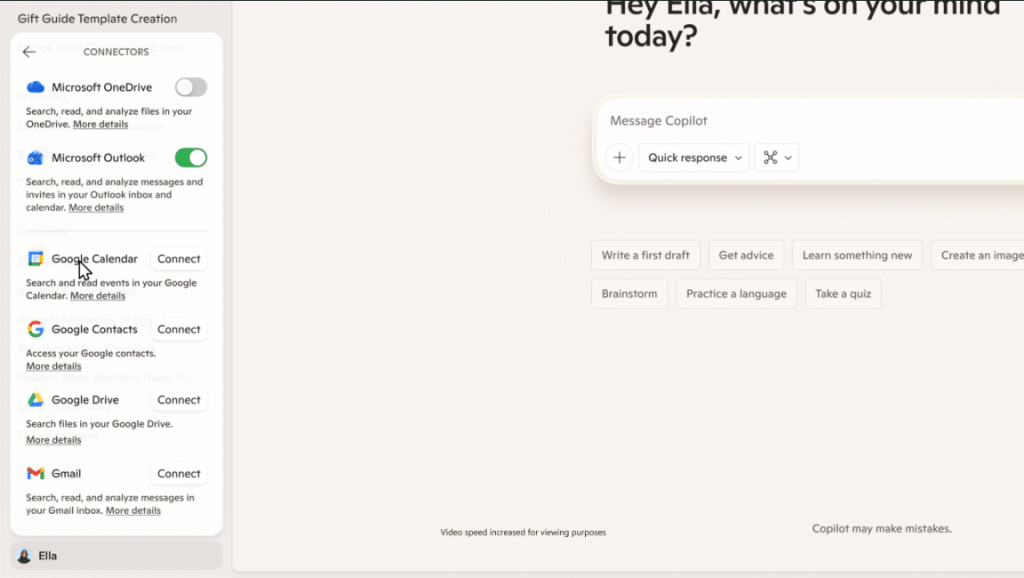
Unlike standalone software, Microsoft Copilot does not generate insight in isolation. It operates inside your Microsoft 365 ecosystem, your emails, documents, chats, permissions, and stored knowledge.
If SharePoint libraries are disorganized, Copilot will reference disorganized content. If access permissions are too broad, it may surface information users should not easily see. When governance policies lack clarity, the AI system works within that same ambiguity.
In short, Microsoft Copilot amplifies your environment, good or bad.
For that reason, deploying Microsoft Copilot without preparation often exposes weaknesses instead of solving them.
The Artificial Intelligence Gap in U.S. Organizations
Most U.S. companies rely heavily on Microsoft 365. Over time, however, digital environments become harder to manage.
Permissions expand.
Legacy files remain accessible.
Data classification becomes inconsistent.
Meanwhile, structured access reviews occur less frequently.
Although daily operations continue smoothly, once Microsoft Copilot begins drawing from this environment, hidden gaps become more visible.
Artificial intelligence does not fix structure. Instead, it reflects it.
Therefore, a responsible AI rollout begins with reviewing access controls, validating governance standards, and aligning security baselines. Without that foundation, organizations risk confusion, compliance exposure, and unintended data visibility.
Security and Governance Must Come First
As Microsoft expands Copilot capabilities, including deeper integrations and multi-step workflows, the volume of data it touches increases.
That shift raises the stakes.
With the right permissions, Microsoft Copilot can summarize executive emails, draft responses from internal files, and analyze reports across departments. If security controls are inconsistent, those same features create operational risk.
Before activating Copilot, organizations should evaluate conditional access policies, confirm multi-factor authentication enforcement, and review role-based permissions.
This process does not slow innovation. Instead, it ensures secure AI adoption.
When governance and security are aligned, AI becomes a productivity engine rather than a liability.
The Strategic Opportunity Around Microsoft Copilot
Microsoft is positioning Copilot as a core productivity layer, not an optional add-on. Through partner programs and promotional incentives, adoption is actively encouraged.
As a result, U.S. businesses face a strategic window.
Organizations that plan their Microsoft Copilot implementation today can align funding, governance, and structured rollout strategies. On the other hand, companies that delay may adopt reactively often under competitive pressure, without structure or financial advantage.
Proactive adoption builds leverage.
Reactive adoption limits flexibility.
Businesses that prepare their environment before enabling Copilot will extract measurable value faster and with fewer disruptions.
Turning Artificial Intelligence Into Business Advantage
When implemented intentionally, Microsoft Copilot can significantly improve operational efficiency.
Sales teams can generate proposals from meeting summaries, operations leaders can condense lengthy reports within minutes, executives can extract insights from complex spreadsheets without manual filtering.
However, Microsoft Copilot delivers measurable ROI only when aligned with business objectives.
Organizations must define how this AI capability supports revenue growth, operational speed, and decision clarity. Without alignment, Copilot risks becoming another underused feature inside Microsoft 365.
A successful Copilot strategy requires clarity, governance, and executive oversight from the beginning.
Why Structured Implementation Matters
Rolling out Microsoft Copilot across an organization requires more than activation. It demands readiness validation, governance alignment, and phased deployment.
As a Microsoft Solutions Partner, CSE approaches AI as part of a broader digital transformation strategy.
That includes reviewing Microsoft 365 security baselines, aligning data governance policies, structuring permissions carefully, and deploying Copilot in controlled phases.
Ongoing monitoring and optimization ensure adoption remains aligned with business objectives.
Because Microsoft‘s AI does not operate in isolation, its effectiveness depends on the discipline of your broader Microsoft environment.
Competitive Pressure Is Accelerating
Across the United States, organizations are evaluating Microsoft Copilot as a productivity multiplier rather than an experiment.
Teams expect automation.
Leadership expects efficiency.
Competitors explore artificial intelligence-driven workflows.
Consequently, companies that structure their Copilot deployment correctly gain operational momentum. In contrast, organizations that rush without preparation may encounter compliance concerns, data confusion, and inconsistent user adoption.
Artificial intelligence does not create competitive advantage automatically.
Preparation does.
Final Thought
Microsoft Copilot is powerful. That much is clear.
Yet being ready determines impact.
AI will not create governance, structure, or security on its own. Instead, it operates within what already exists.
For U.S. businesses ready to embrace artificial intelligence, it should be implemented with planning, oversight, and strategic alignment.
The goal is not simply to activate Copilot. The goal is to transform it into a sustained competitive advantage.