
Manufacturing Industry
Manufacturing businesses depend on more than machines to keep production moving. Behind every production schedule, purchase order, inventory update, quality inspection, and shipment is a network of employees, devices, applications, information, and infrastructure that needs to work reliably.
When one critical connection fails, the consequences can quickly move beyond an IT problem. Production schedules can slip, employees may lose access to important information, suppliers can be affected, and customer commitments become harder to meet. Computer Solutions East (CSE) helps manufacturers manage and secure their business technology, strengthen infrastructure, support employees, and modernize systems without losing sight of what matters most: keeping the operation running.

A Technology Problem Can Become a Production Problem Faster Than You Think.
A production line can have capable employees, reliable machinery, available materials, and confirmed customer orders and still lose valuable time when the systems supporting the operation stop working. A network interruption may prevent employees from accessing production information. An unavailable business application can delay scheduling or purchasing. A compromised account can force systems offline while the business investigates. An unreliable backup can turn a manageable incident into an extended recovery effort. Manufacturers also operate differently from traditional office businesses. Maintenance windows are limited, equipment may depend on older applications, suppliers need accurate information, and employees across different shifts must be able to continue work without rebuilding context. The 2025 cyberattack affecting Jaguar Land Rover demonstrated how a technology incident can disrupt factory operations and create consequences for suppliers throughout the manufacturing chain.
Could a technology outage interrupt today's production schedule?
Manufacturing depends on connections between people, business systems, networks, production information, and external suppliers. Understanding which connections are essential helps prioritize maintenance, recovery, and support.
Are your office systems and production environment appropriately separated?
Corporate devices, remote connections, business applications, and production-related networks should not automatically share unrestricted access. Manufacturers need a clear understanding of how these environments interact and where security boundaries belong.
Are customer contracts demanding stronger proof of security?
Manufacturers supplying defense, aerospace, and other regulated customers may face requirements involving sensitive information, documented controls, and cybersecurity assessments. CMMC and NIST 800-171 can become relevant when specific defense-contract and information-handling obligations apply.

The Shipment Begins Long Before the Finished Product Reaches the Truck.
A customer order can begin in sales, move into purchasing, become part of a production schedule, pass through manufacturing and quality control, and eventually reach shipping, invoicing, and customer service. Every department plays a different role, but they depend on information remaining accurate and accessible throughout the process. A production supervisor may need updated specifications. Purchasing needs current material availability. Quality control must document results. Shipping needs the correct order details. Finance needs information that matches what was actually produced and delivered. When those systems are disconnected, employees compensate manually. Information gets re-entered, spreadsheets multiply, and the production team may have to stop and verify details that should already be available.
Work happens across rooms, devices and time zones. The workplace should too.
Understand What Keeps the Plant Running. Then Strengthen What Supports It.
Understand the Production Environment
CSE begins by reviewing the technology the manufacturer depends on, including employees, workstations, servers, network infrastructure, Microsoft 365, business applications, backups, security, vendors, and connectivity between facilities. Where production equipment and operational technology are involved, CSE works with plant leadership and appropriate equipment or automation specialists to understand dependencies and responsibilities.
Stabilize and Secure Critical Systems
Once the environment is understood, CSE can prioritize the changes that reduce operational risk and recurring problems. That may include network improvements, Microsoft 365 security configuration, endpoint protection, infrastructure replacement, backup verification, access controls, or cloud migration.
Maintain the Environment as Production Evolves
Manufacturing environments change as companies add equipment, expand production, onboard employees, open facilities, introduce applications, or accept new customer requirements. CSE can provide ongoing monitoring, user support, security management, documentation, recovery planning, and technology guidance so the business can introduce improvements without allowing its infrastructure to become increasingly difficult to manage.
Support the Factory, Secure the Business, and Plan the Next Stage of Growth.
Managed IT & Employee Support
Help desk and technical support Office and supported plant workstation management Device installation, maintenance, and monitoring Employee onboarding, offboarding, and escalation
Network & Manufacturing Connectivity
Plant and office network configuration Switches, firewalls, and wireless connectivity Secure remote and vendor access IT/OT network segmentation planning with plant specialists
Cybersecurity & Threat Monitoring
Microsoft 365 Security Baseline Defender for Endpoint / SentinelOne Identity, access, and device protection 24/7 security monitoring and response services
CMMC & NIST 800-171 Implementation
Defense-contract and CUI scope assessment CMMC Level 2 and NIST 800-171 control mapping GCC High or controlled-environment planning where appropriate Security documentation, evidence, and assessment preparation
Backup & Business Continuity
Microsoft 365 SaaS backup Server and business-data recovery planning Backup verification and restore procedures Recovery priorities for production-dependent systems
Azure & Infrastructure Modernization
Azure lift-and-shift services Server and workstation modernization Mailbox, SharePoint, and OneDrive migration Infrastructure implementation and planned cutovers
Manufacturers Need Technology They Can Depend On, Not Another Source of Downtime.
A better-managed manufacturing environment does not eliminate every equipment issue, software problem, or unexpected event. It gives the business more control over how technology problems are detected, handled, and prevented from becoming recurring disruptions. Employees have a defined support path. Critical infrastructure is documented. Networks and access controls are reviewed. Backup responsibilities are clear. Technology changes are coordinated with production rather than introduced without considering their operational consequences.
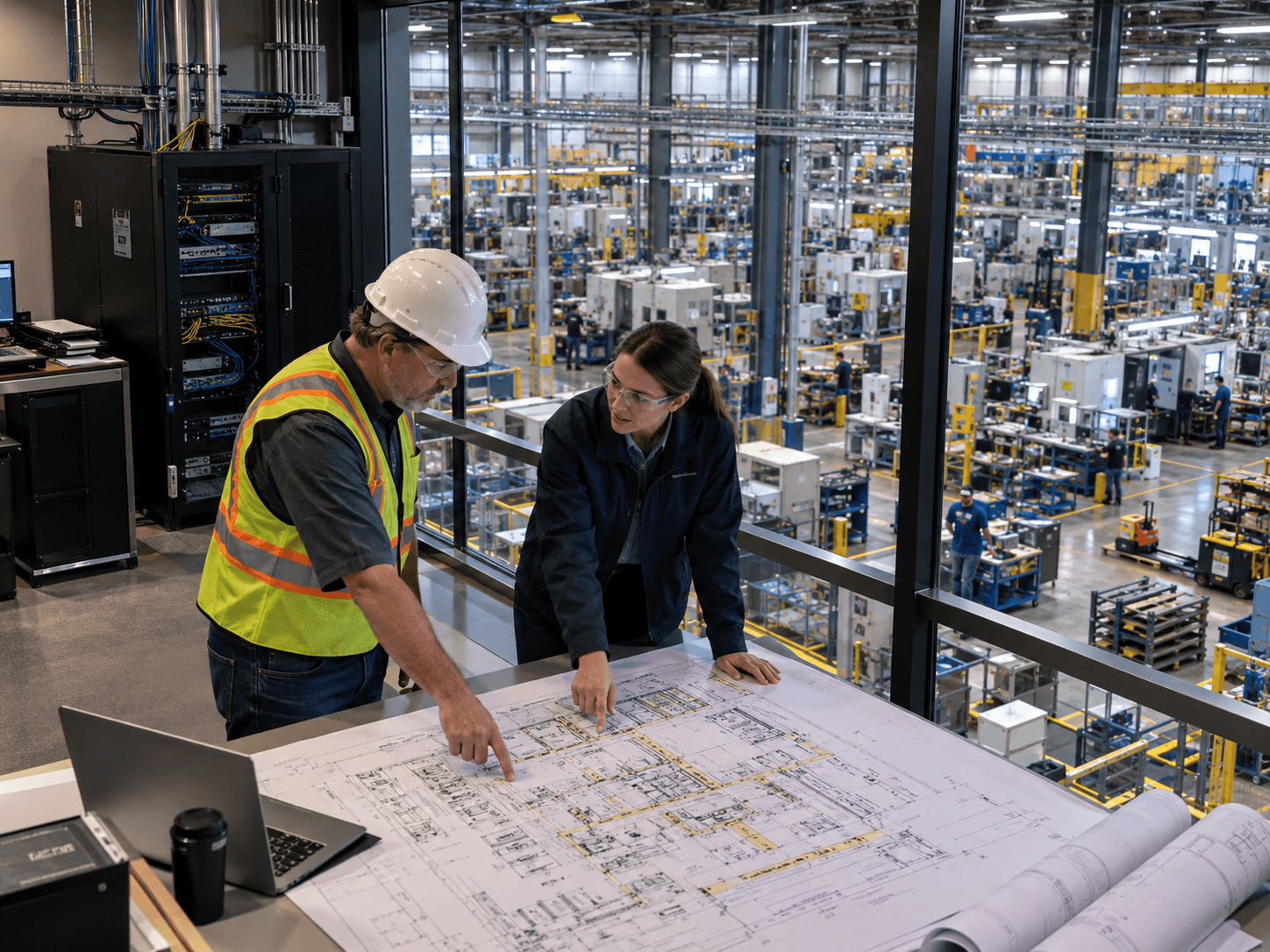
Modern Manufacturing Needs More Than Machines. It Needs Connected Information.
A manufacturer may already use Microsoft 365 for communication and collaboration, local servers for business applications, cloud platforms for selected workloads, and ERP software for purchasing, inventory, finance, or operational processes. Those systems are most useful when employees can access the right information without unnecessary duplication, delays, or security gaps. CSE helps manufacturers configure and manage Microsoft technologies around business operations while considering the separate requirements of production equipment and industrial networks.
Security
Microsoft Security capabilities such as Entra ID and Defender help organizations protect accounts, devices, email, and information. CSE implements and manages security configurations that support business operations, including identity controls, endpoint protection, threat monitoring, and access management.
Azure Infrastructure
Microsoft Azure supports cloud infrastructure, applications, data services, and recovery options. CSE helps manufacturers evaluate which systems should remain on-site, which can move to Azure, and how migrations can be planned to minimize disruption to existing operations.
Data, AI & Business Applications
Microsoft's Data & AI, App Innovation, and Business Applications technologies including Copilot, Power Platform, Dynamics 365, and Business Central can help organizations organize business information, automate administrative work, improve reporting, and connect important processes. For manufacturers, opportunities can include purchasing workflows, inventory information, approvals, reporting, supplier coordination, and administrative tasks that currently depend on manual follow-up.
The Best Technology Outcome Is a Factory That Can Keep Moving.
More Dependable Daily Operations
Employees have clearer support paths, infrastructure receives ongoing attention, and recurring technology problems can be addressed before they repeatedly interfere with work.
Better Visibility Across the Business
Leadership has a clearer view of its technology dependencies, access responsibilities, security concerns, recovery capabilities, and upcoming infrastructure needs.
Stronger Protection for Customer and Business Information
Security controls, monitoring, backup, and documentation help manufacturers reduce exposure and respond more effectively when an incident occurs.
More Room to Grow
New employees, production capacity, facilities, equipment-related systems, and business applications can be introduced through a more consistent technology plan rather than another series of disconnected fixes.

Questions we hear early.
It is a structured review of how your people work and how your technology supports that work, followed by a plan to close the gap. The output is a workplace strategy and roadmap, not a software purchase.
Licensing gives you the capability. Consulting decides how it should be configured, which tools each team actually needs, how processes move between them, and how people are brought along. Most organizations already own more than they use.
Yes. The starting point is your current environment, including non-Microsoft tools. Replacing something is a decision the business makes, not a prerequisite for the engagement.
That is usually the reason organizations start. The goal is one workflow that behaves the same way in the office, at home or on the road, rather than a separate remote version of each process.
Yes. Adoption is part of the engagement, not an afterthought. A rollout that people do not use has not improved anything.
Your Workplace Should Fit The Way Your Business Works.
Let's identify where technology is creating friction and where a better approach can simplify the work.