
Managed Security Services
Cybersecurity That’s Managed, Not Left on Your To-Do List
Your business needs more than security software, it needs someone responsible for managing it. CSE monitors threats, investigates suspicious activity, manages protection across your users and devices, and responds to security incidents so your team can stay focused on the business.
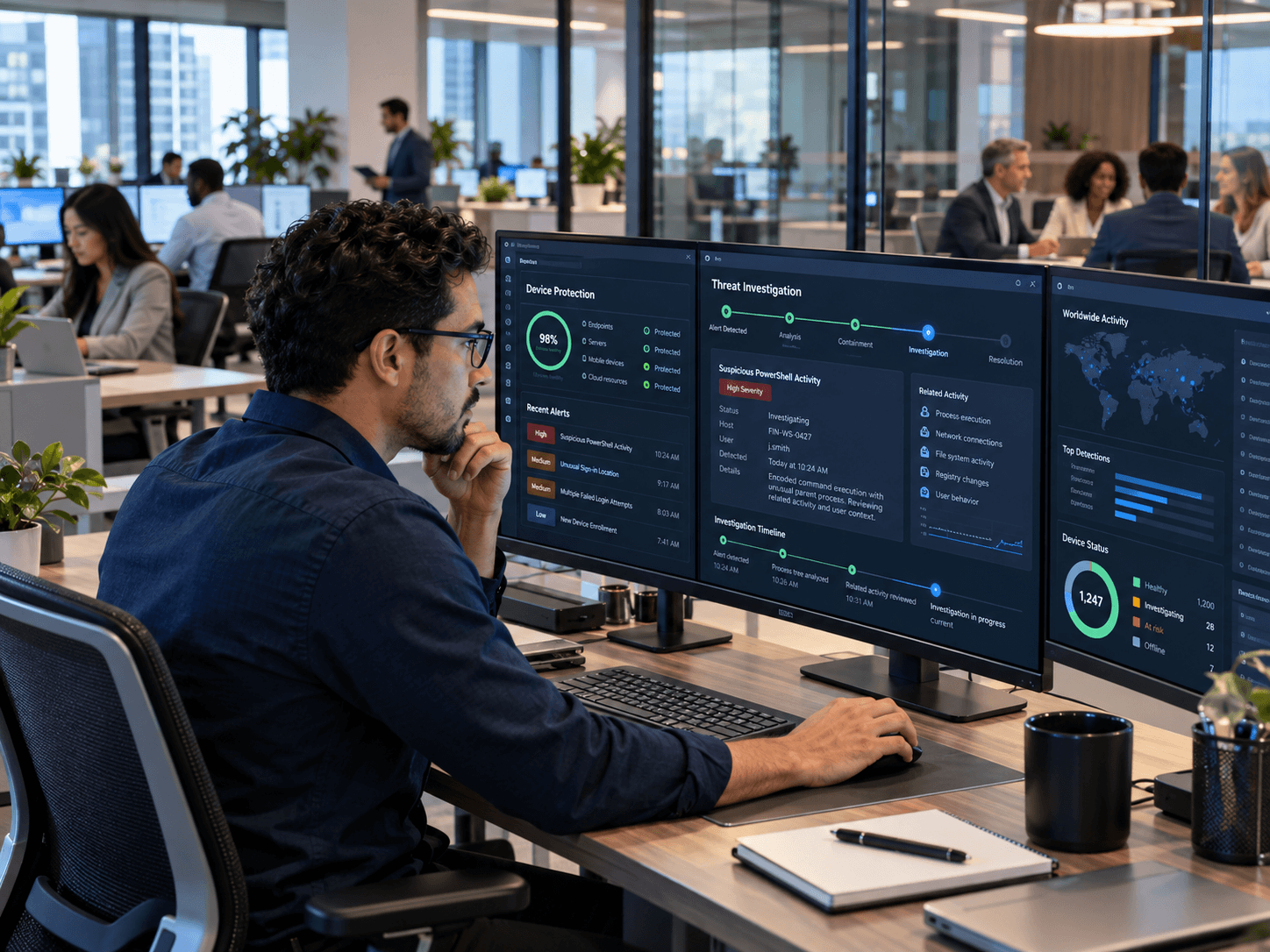
Who Takes Responsibility When a Security Alert Appears?
A suspicious email. An unfamiliar sign-in. A device flagged for unusual activity. Your employees need to know what to do and your business needs someone responsible for what happens next. That responsibility should not fall on the owner or office manager simply because they are the person everyone calls. CSE takes on the monitoring, investigation, and response work, with actions and escalation handled through an agreed security process.
Are people working around the technology?
Shadow spreadsheets, side channels and manual re-entry are signs the tools do not match the work.
Are remote and office workflows still disconnected?
Hybrid teams often run two versions of the same process, one for each location.
Are too many tools creating more complexity instead of less?
Overlapping applications add licensing cost, security surface and daily friction.

Headline Your Team Signs Off. Security Monitoring Continues.
CSE provides around-the-clock security monitoring and response for the environment under management. Our team reviews suspicious activity, investigates alerts, and takes action through the agreed response process. Your employees do not have to become security analysts, and your leadership does not have to decide what every technical alert means.
Work happens across rooms, devices and time zones. The workplace should too.
Start With The Work. Then Choose The Technology.
Understand
Review how people work today, where friction exists, and what the business needs to improve.
Design
Build the workplace strategy, technology architecture, workflow, adoption plan, and roadmap.
Implement
Deploy, integrate, train, and improve the environment with the business.
Connected Protection. Clear Responsibility.
Threat Monitoring & Response
Monitor suspicious activity, investigate security alerts, and carry out response actions through an established process. CSE manages the work from investigation through documented follow-up.
Identity & Access Security
Manage authentication, permissions, and account-related risks so access to business systems reflects who needs it. Review suspicious user activity and enforce appropriate sign-in protections.
Endpoint & Vulnerability Management
Manage device protection, investigate endpoint alerts, and address identified weaknesses. Keep security settings and device requirements under review instead of leaving them unchanged after deployment.
Network & Application Security
Manage the security controls protecting network access and connected applications. Depending on scope, this can include firewall monitoring, secure remote access, and web application protection.
Email & Business Data Protection
Manage phishing-related incidents, suspicious file access, and controls designed to reduce inappropriate data sharing. Connect email, identity, and data protection across the Microsoft environment.
Security Reporting & Review
Keep security findings, incidents, and recommended improvements visible. Give leadership a documented view of priorities rather than a collection of technical alerts with no clear next step.
Security Built Around Your Organization. Managed as It Evolves
Your security requirements change as people join, devices are replaced, and access to business information evolves. CSE manages the controls around those users, devices, and data, while documenting security activity and recommended improvements. Your team gets a clearer understanding of what is being managed, what needs attention, and who is responsible for the next step.
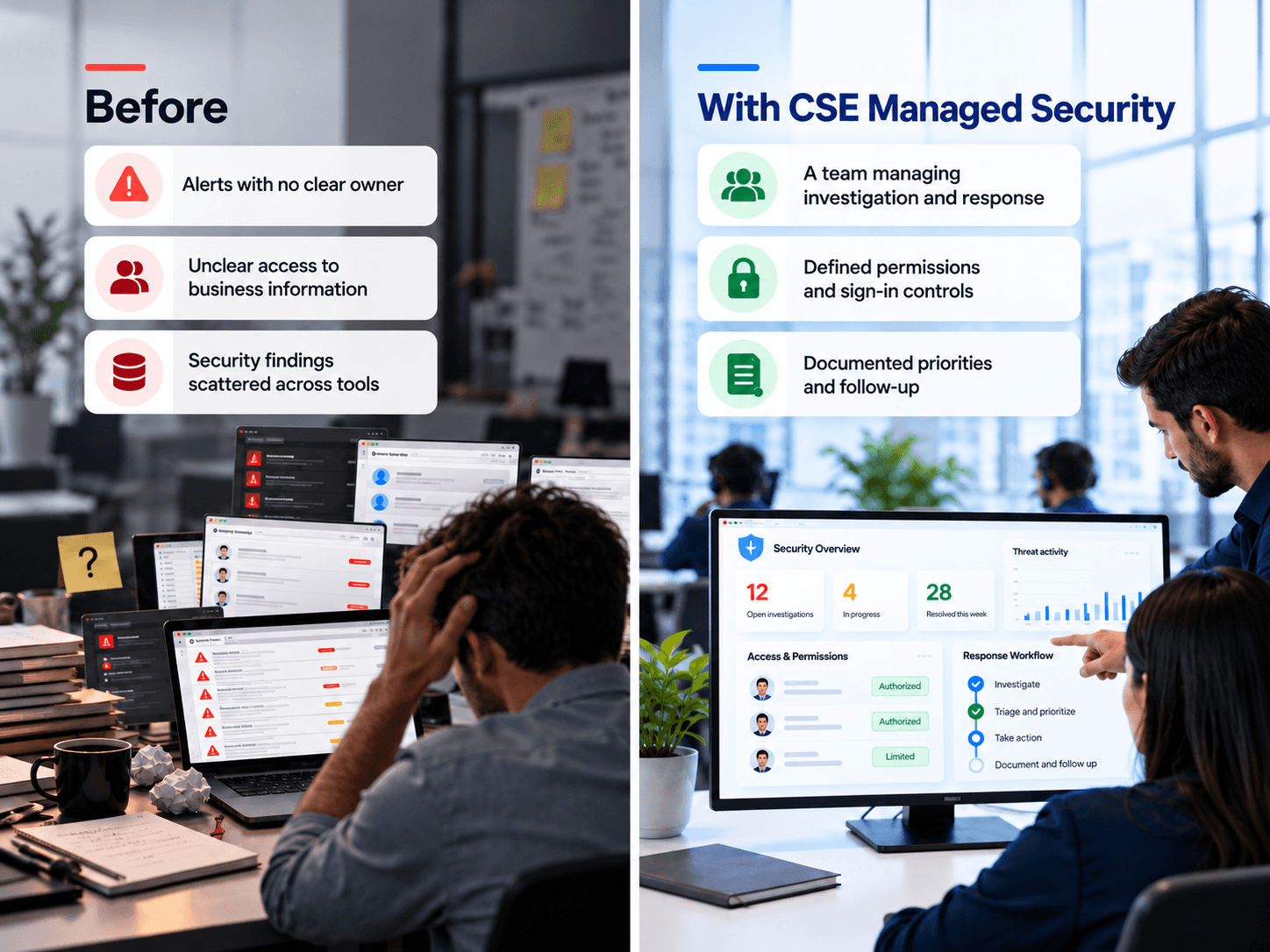
From Security Gaps to Ongoing Management.
The purpose of managed security is to give your business an accountable process, not simply more alerts. CSE’s monitoring, investigation, reporting, and follow-up are designed to make security responsibilities clearer and help leadership understand where action is needed.
Understand
Review the environment, existing protections, and identified weaknesses. Establish which systems need coverage and prioritize findings by risk.
Strengthen
Configure the agreed security tools and controls. Address priority gaps in access, device protection, and the wider environment.
Review & Improve
Document security activity, review findings, and identify further changes needed to strengthen protection.
Less Security Guesswork. More Clarity About What Comes Next.
Clear Ownership
Know which team is responsible for the security work covered by your service.
Actionable Findings
Understand which issues need attention and what response or improvement is recommended.
Ongoing Visibility
Keep security decisions connected to documented findings rather than assumptions.

Questions we hear early.
It is a structured review of how your people work and how your technology supports that work, followed by a plan to close the gap. The output is a workplace strategy and roadmap, not a software purchase.
Licensing gives you the capability. Consulting decides how it should be configured, which tools each team actually needs, how processes move between them, and how people are brought along. Most organizations already own more than they use.
Yes. The starting point is your current environment, including non-Microsoft tools. Replacing something is a decision the business makes, not a prerequisite for the engagement.
That is usually the reason organizations start. The goal is one workflow that behaves the same way in the office, at home or on the road, rather than a separate remote version of each process.
Yes. Adoption is part of the engagement, not an afterthought. A rollout that people do not use has not improved anything.
Your Workplace Should Fit The Way Your Business Works.
Let's identify where technology is creating friction and where a better approach can simplify the work.